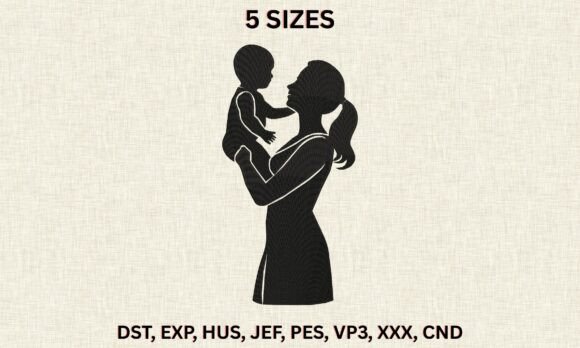
Review: Mom Holding Baby Embroidery File
As a professional embroidery designer who has spent years translating digital concepts into tangible brand assets, I approach every new machine embroidery design with a critical eye. My goal is not just to see if a pattern looks pretty on a screen, but to determine if it can withstand the rigors of commercial production. Today, I am reviewing the Mom Holding Baby Embroidery File, a design described as an elegant mother and baby silhouette. While the product description highlights its suitability for Mother's Day gifts and nursery decor, my focus here is strictly on its viability for small business merchandise, branded patches, and corporate apparel.
First Impressions: Elegance Meets Brand Utility
Upon opening the digital embroidery file, the first thing that strikes me is the clean, flowing nature of the silhouette. The design avoids overly intricate detailing in favor of bold, recognizable shapes. For a small business owner or an Etsy seller looking to create a cohesive line of handmade products, this simplicity is a massive advantage. In the world of commercial embroidery, less often means more when it comes to scalability. The "elegant" descriptor in the title holds true; the lines are smooth, suggesting a premium feel rather than a rustic or playful aesthetic. This makes it an excellent candidate for boutique branding where visual consistency and a touch of sophistication are paramount.
The silhouette format is particularly versatile. It does not rely on complex shading or gradient effects that can fail on certain fabrics. Instead, it uses negative space effectively. This characteristic suggests that the Mom Holding Baby Embroidery File could serve as a powerful logo accent for businesses in the wellness, parenting, or lifestyle sectors. Whether you are a florist creating custom aprons or a café designing staff uniforms, the design's inherent warmth aligns perfectly with brands that want to project care and connection.
Performance in Real-World Business Applications
When evaluating how this embroidery file performs in actual production, several use cases immediately stand out. The most obvious application is the creation of high-quality embroidered patches. Because the design is a silhouette, it translates exceptionally well to woven or twill patches. A small business could produce these patches to attach to tote bags, denim jackets, or backpacks as part of a limited-edition collection. The clean edges ensure that the patch maintains its integrity even after repeated handling.
For apparel decorators, this design offers significant potential for custom apparel. Imagine a local bakery using this motif on the back pocket of their chef's aprons or as a subtle chest logo on server shirts. The apron embroidery would add a personal, welcoming touch to the uniform without overwhelming the wearer. Similarly, for cap embroidery, the compact nature of the silhouette allows it to fit neatly on a structured front panel. Unlike text-heavy designs that can distort on curved surfaces, the organic shape of the mother and baby adapts naturally to the curvature of a baseball cap.
Beyond clothing, this design asset works beautifully on tote bag design projects. Many eco-friendly brands are moving away from screen printing toward embroidery for a more durable, tactile finish. Placing the Mom Holding Baby Embroidery File on a canvas tote creates a statement piece that feels both artisanal and professional. Furthermore, for event merchandising or customer appreciation gifts, this design serves as a perfect emblem for branded keychains or fabric labels sewn onto packaging. It elevates the perceived value of the finished product, signaling to the customer that attention to detail was prioritized.
Critical Considerations for Production
While the design is robust, there are specific scenarios where caution is required. As a designer, I always advise testing before mass production. First, consider the size constraints. If you intend to use this for tiny buttonhole-style logos or very small cap embroidery, you must verify that the stitch definition remains clear. Silhouettes can sometimes lose their impact if scaled down too aggressively, resulting in a muddy appearance.
Stitch density is another factor to monitor. Although the design appears simple, some software algorithms may fill large areas with dense satin stitches. On textured fabrics like fleece or heavy canvas, excessive density can cause puckering. Always test the design on the actual material you plan to use. Additionally, pay close attention to thread colors. The elegance of the silhouette relies heavily on contrast. Using a light thread on a dark uniform might require a backing layer or a different stitch type to ensure visibility and durability.
Fabric texture plays a crucial role here. Smooth cottons and linens will showcase the clean lines beautifully. However, on highly textured knits or stretchy materials, the stabilizer choice becomes critical. You must use a proper stabilizer—likely a cut-away for stretch fabrics—to prevent distortion during the stitching process. Without the right support, the delicate curves of the mother and baby figure could warp, ruining the professional look of your merchandise.
Impact on Brand Identity and Customer Trust
Incorporating the Mom Holding Baby Embroidery File into your product line goes beyond aesthetics; it influences your brand identity. This design communicates warmth, protection, and love. For a business targeting parents or families, using this imagery builds an immediate emotional connection. It signals that your brand understands the values of your customers. When a client sees a professionally embroidered version of this design on a small business merch item, it enhances their trust in your quality standards.
Consistency is key to recognition. By using this machine embroidery design across various touchpoints—from staff uniforms to gift tags—you create a unified visual language. This repetition strengthens buyer engagement and makes your brand memorable. In a crowded market, the tactile quality of embroidery sets you apart from competitors relying solely on printed graphics. It adds a layer of authenticity that resonates with consumers seeking genuine, handmade experiences.
Practical Designer Notes for Implementation
Before committing to a full run of products, follow these essential steps:
- Test in Black and White: Start by digitizing or sampling the design in black thread on white fabric. This isolates the structural integrity of the stitches without the distraction of color.
- Verify Hoop Size: Ensure the design fits within your standard hoop dimensions. If it requires a larger hoop than your machines accommodate, you may need to resize or split the design, which could affect quality.
- Check Licensing: Confirm that the license for this digital embroidery file covers commercial use. Many files are sold for personal use only. Do not risk legal issues by assuming unlimited rights.
- Create a Mockup: Generate a printable mockup showing the design on your intended products. This helps clients visualize the final result and approve the placement before any thread is cut.
- Compare Design Assets: Place the Mom Holding Baby Embroidery File alongside your existing logos and patterns. Does it complement your current style, or does it clash? Visual harmony is essential for a professional brand image.
In conclusion, the Mom Holding Baby Embroidery File is a strong contender for businesses looking to infuse their merchandise with emotion and quality. Its elegant silhouette offers versatility across patches, apparel, and accessories. However, success depends on careful execution regarding fabric choice, stabilizer use, and licensing verification. By treating this Embroidery design as a strategic brand asset rather than just a decorative element, small business owners can create products that truly resonate with their audience.